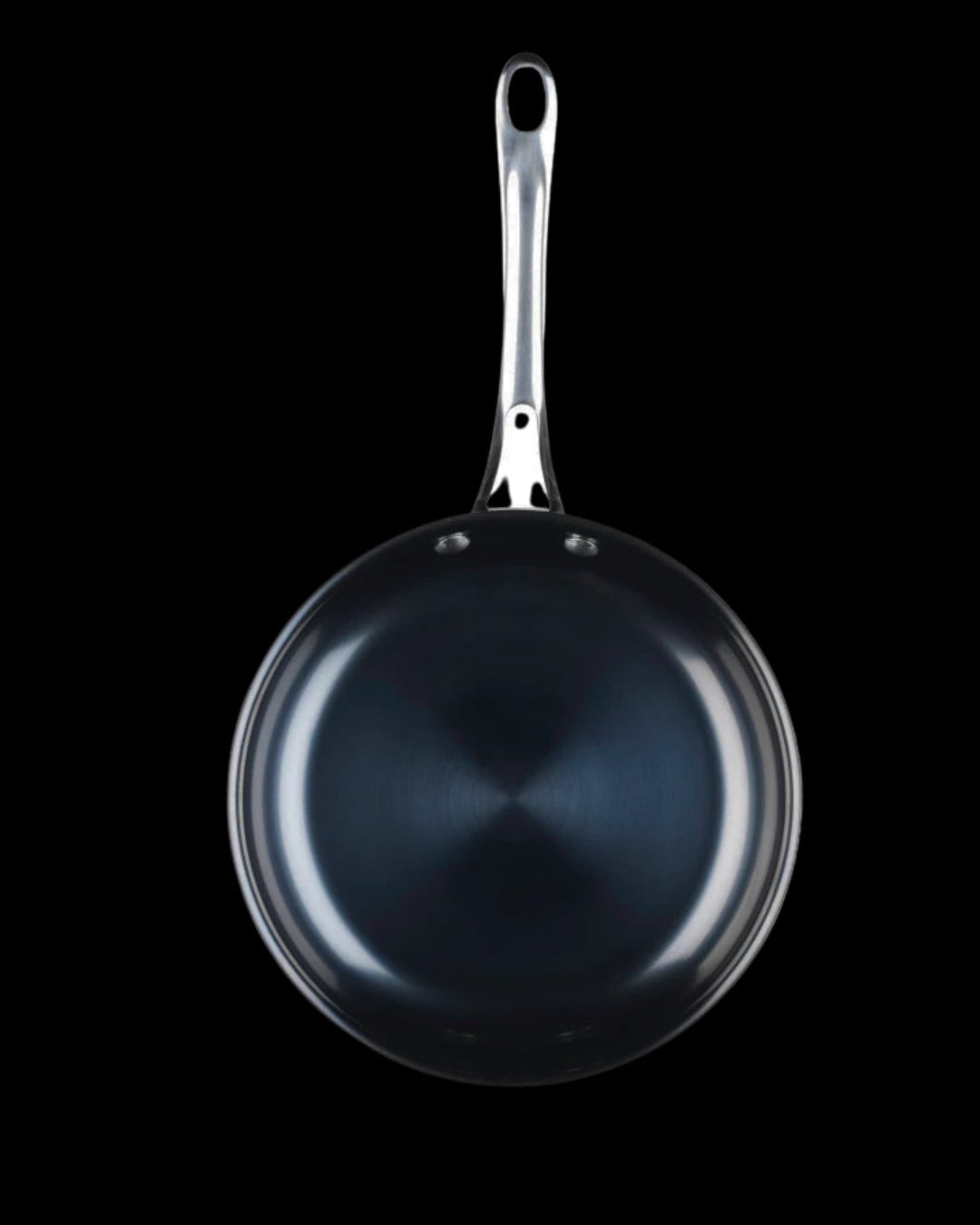

Healthy pan: which one to choose and why Teflon is not always the best choice
Share
Healthy eating is not just about high-quality ingredients. The quality of our food is also affected by the cooking environment – especially the pan we cook on.
Different materials react differently to heat, and some of them can also affect the composition of food and our health.
A pan is not a neutral surface – when exposed to heat, it takes on a life of its own.
The right pan helps preserve the flavor and nutritional value of food, while the wrong pan can unknowingly add something to the dish that we definitely don't want.
Teflon – convenient, but with a downside
Pans with Teflon or PTFE coating have become widespread in kitchens in recent decades. They are light, non-stick and convenient – food does not stick and little fat is used. But the downside of this convenience is serious. If Teflon is heated above 260 °C , toxic compounds begin to be released from the surface. If the coating gets scratched, particles of chemical compounds can get into the food. Until recently, PFOA compounds were used in the production of Teflon – substances that are associated with cancer risk, hormonal disruptions and extensive environmental pollution.
Nowadays, many non-stick pans are advertised as PFOA-free , which can give the impression that they are completely safe. In reality, most of them contain PTFE , the same substance known as Teflon. Although PFOA (perfluorooctanoic acid) has been banned in the European Union and many other countries since 2013, compounds from the PFAS group , also known as “forever chemicals,” are still used. They do not break down in nature and can accumulate in the body over time. Therefore, the label “PFOA-free” does not mean that the pan is completely PFAS-free or risk-free . At high temperatures (above 260 °C), PTFE also begins to break down and release harmful fumes.
If you want to understand how extensive the effects of such substances can be, it is definitely worth watching the film Dark Waters (2019) Based on the Dupont lawsuit that exposed the true consequences of Teflon production on people and nature, the film is a sobering reminder that kitchen convenience can be very costly in the long run – both to your health and to the planet.
Dark Waters is a thought-provoking film for anyone who cares about health, the environment, and conscious choices. This film will make you think differently about all the products that seem so convenient and safe every day.
What are PFOA and PFAS?
PFOA (perfluorooctanoic acid) is part of a group of substances known as PFAS , or “forever chemicals.” These are man-made compounds that do not break down in nature and accumulate in the body over time. PFAS are used not only in non-stick pans, but also in waterproof clothing , cosmetics , food packaging (e.g. burger wrappers, fast food boxes, coffee cups, etc.) and even fire extinguishers . Their long-term effects on health and the environment are still being studied, but they are already known to cause hormonal disruptions, damage to the immune system and certain forms of cancer .
Cast iron – an eternal and natural choice
Cast iron pans are a classic that will never lose their value. Yes, they are heavy, but their advantages outweigh the disadvantages.
- Heats evenly and retains heat for a long time.
- With proper care, it becomes naturally non-sticky.
- Can enrich food with a small amount of iron – especially beneficial for those prone to iron deficiency.
Cast iron requires care: it needs to be oiled occasionally and kept dry to prevent rust. But this care is more of a ritual – something that connects you to cooking on a deeper level. A good cast iron pan can last a lifetime and be passed down from generation to generation.
Stainless steel – reliable and safe
Stainless steel pans are a favorite among many. They are chemically stable, durable, and suitable for very high temperatures.
- Does not release chemicals or change when exposed to heat.
- Ideal for browning and caramelizing meat.
- It is well suited for making sauces because it does not react with acids or alkalis.
It may seem to a beginner that the food will stick, but it is just a matter of technique. If you heat the pan correctly, cool it down and add fat to the slightly cooled pan, it will behave perfectly. In addition, stainless steel can also be used in the oven, which makes it a very versatile and durable choice.
Carbon steel – the secret weapon of professionals
Carbon steel is a cross between cast iron and stainless steel: lighter than cast iron but just as durable. It is preferred by many chefs because it responds quickly to heat and gives dishes a beautiful browning.
- Very good thermal conductivity and resistance.
- Over time, a natural non-stick layer (seasoning) develops.
- Suitable for both high-heat frying and delicate dishes.
Carbon steel requires maintenance – it needs to be oiled regularly and not left wet. With proper care, this pan will last practically forever and get better with every use.
Ceramic coating – a safe compromise
Ceramic coated pans were introduced to the market as an alternative to Teflon. They do not contain PTFE or PFOA compounds and are initially very non-stick.
- Chemically safer than Teflon.
- Visually beautiful and more environmentally friendly.
- Easy to maintain and easy to use.
However, over time, the ceramic coating can wear down, especially if you use metal utensils or wash the pan in the dishwasher.
A quality ceramic pan will last for several years, while a cheaper option will lose its non-stick properties more quickly. If you choose this route, it is worth investing in a quality product.
Enamel and glass
Enameled cast iron pans or glassware are also safe and chemically stable.
They do not react with food and are perfect for stews and oven dishes.
The disadvantage is fragility – enamel can crack and glass can break if you are careless with them.
What to avoid
- Teflon and other PTFE surfaces: their risks outweigh the benefits.
- Cheap non-stick pans with unknown coating: Opaqueness from the manufacturer is a warning sign. If it is not clearly stated what coating is used, it is better to forgo it.
Pan maintenance and lifespan extension
Even the best pan needs care.
Proper care will ensure that the pan serves you for years and maintains its non-stick properties and appearance.
General care tips:
- Do not use abrasive sponges or strong chemical cleaners.
- Always let the pan cool before washing, especially if it is made of cast iron or carbon steel.
- Avoid sudden temperature changes - this may damage the coating.
- Always dry the pan after washing.
- Coat cast iron and carbon steel pans with a thin layer of oil before storing.
- For a ceramic or stainless steel pan, use a soft cloth or non-abrasive brush.
With proper care, a pan will last for years, sometimes even a lifetime.
You can find a longer guide on how to care for your pan and extend its life here:
Summary: the pan as an extension of health
Healthy eating is not limited to what we eat - it starts with the choice of pan.
The right pan doesn't add chemicals or toxins to food, but rather lets the flavors shine.
The wrong pan may seem convenient, but its actual cost may be too high.
Cast iron – heavy, but eternal and natural.
Stainless steel – reliable, universal and safe.
Carbon steel – a professional choice that gets better with time.
Ceramic coating – a good compromise between non-stick and safety.
A pan is not just a tool, but a part of our daily life and health.
The choices we make today shape how food nourishes us tomorrow.
The articles on our site are designed to raise awareness and encourage you to make better choices in your daily life. The goal is not to scare you, but to open up topics that are often not talked about - so that you understand how food, environment and habits affect your well-being. We share knowledge and observations based on our experience and research, also relying on scientific sources. This information is not a substitute for professional medical advice or diagnosis. Listen to your body, ask questions and take conscious steps towards better health.